Data protection
ATLAS and the protection of personal data
ATLAS is designed to make your obligations easier under Türkiye's Personal Data
Protection Law No. 6698 (KVKK) — and, by the same architecture, under the EU General Data
Protection Regulation (GDPR).
You are the data controller
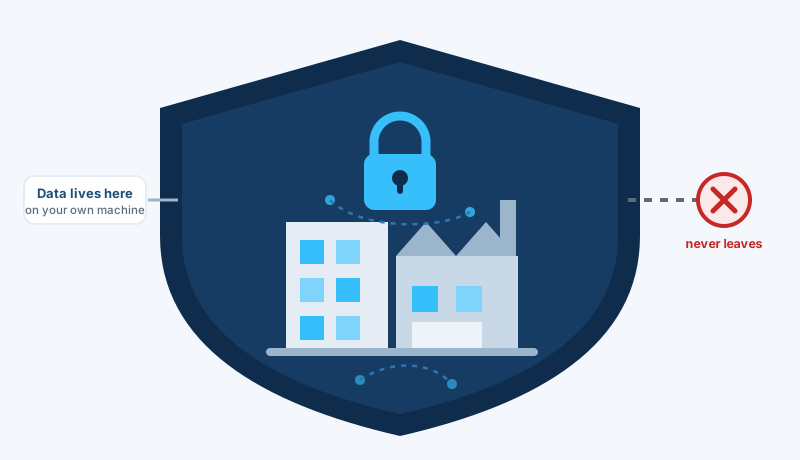
ATLAS runs on your company's own hardware. The personal data it processes — employee
records, attendance and leave records, customer contact details — stays within your company's
boundaries. It is not transferred to the team that builds ATLAS and it is not stored on
third-party servers.
Cross-border transfers
Keeping data inside the company removes one of the hardest problems in both KVKK and GDPR —
cross-border data transfer — before it arises. Even if you choose the cloud-based AI
option, no raw personal data is sent; only de-identified summary figures are passed on.
If you want no personal data sent at all, you use the local model option — in which case
data never leaves the machine.
Data minimisation
ATLAS processes only the data the relevant department needs. It does not collect unnecessary data
and does not read fields it has no use for.
Access limitation
Role-based authorisation is the technical implementation of the “access for authorised persons
only” principle that both regimes require. The authorisation matrix is defined together with you
during implementation.
Records of processing
Which data was entered and viewed, by whom and when, is recorded.
That log can be used to support your audit and accountability obligations.
Erasure and retention
Because the data sits in your own system, you apply retention periods and erasure requests
according to your own policy. There is no external provider to request deletion from and no process
to wait on.
Please note: this text is for information only and does not constitute legal advice.
Your company's compliance documentation (privacy notices, consent forms, records of processing,
registry filings) should be prepared by your own legal counsel.